
Summary
Frontier AI models in the post-Mythos era are changing the speed and scale of exposure risk. Security teams are entering an era where AI can help discover, chain, and exploit weaknesses faster than traditional programs can absorb. The challenge is no longer finding more issues; it’s knowing which exposures are real, reachable, urgent, and worth fixing first.
To keep pace, you need three capabilities working together: AI-speed risk detection, hyper-prioritization, and autonomous zero-day remediation. But there’s a catch: these capabilities only work when you are prioritizing from a complete picture of risk. If cloud findings are trapped in a separate CNAPP dashboard, cloud risk gets left out of the decision loop.
That matters because cloud risk is not just another category of findings; it’s where some of the fastest-changing exposures live: misconfigurations, over-permissioned identities, vulnerable containers, exposed workloads, and dangerous combinations that may never show up as a traditional CVE. You can’t hyper-prioritize enterprise risk if a major part of the attack surface is being scored and managed somewhere else.
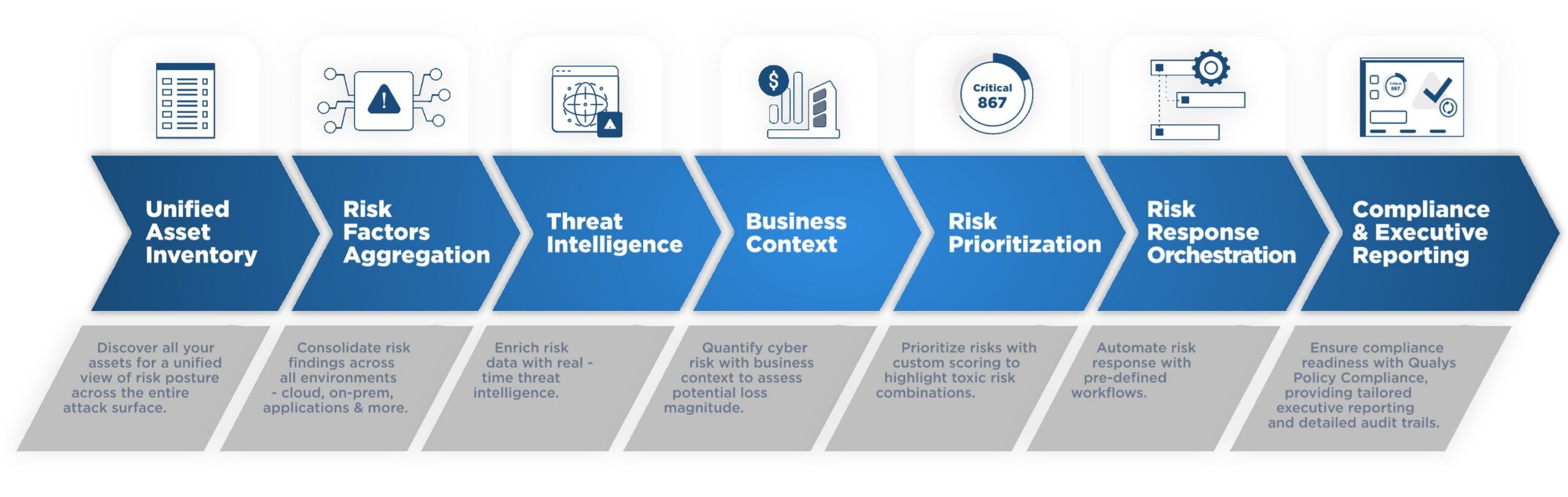
That’s where the Risk Operations Center, or ROC, becomes essential. Qualys Enterprise TruRisk Management, or ETM, is the engine behind the ROC. It ingests and correlates findings from Qualys and third-party tools across the whole stack, including vulnerability management, EDR, cloud, containers, identity, SIEM, ticketing, OT, IoT, and application security.
For cloud, ETM uses CNAPP connectors to bring cloud-native findings into one ranked, validated, dollar-based view of risk. You can connect third-party CNAPP tools such as Wiz, Prisma Cloud, Microsoft Defender for Cloud, Orca, Cortex Cloud, CrowdStrike Falcon Cloud Security, and Aqua. Using Qualys TotalCloud and Container Security, you get a first-party path where cloud and container findings flow natively into ETM.
Key Takeaways
- Cloud risk does not fail from a lack of findings; it fails when findings cannot compete in one risk model.
- The real CNAPP gap is operational: cloud teams and exposure teams often define urgency differently.
- AI-speed attacks make siloed cloud security dangerous because exploitation can move faster than separate workflows can respond.
- Qualys’ advantage is turning cloud findings into ranked, validated exposure decisions inside the ROC.
- TruRisk matters because cloud risk needs business context, not another severity score trapped in another dashboard.
- TruConfirm helps teams avoid wasting remediation cycles on theoretical risks that are not reachable or exploitable.
- TotalCloud and ETM make cloud risk part of exposure management instead of a parallel security program.
- The goal is not more cloud visibility; it is faster agreement on what must be fixed first.
Read More
The post-Mythos era breaks the old risk model
Security teams used to have time. A vulnerability was disclosed, a patch came out, and you often had weeks or months to test, prioritize, and remediate before attackers caught up. That time is gone.
Time to exploit has moved from months to days. In the era of frontier AI models, exploit development can happen in hours, sometimes before defenders even have a patch to deploy.
Security teams already have a name for this shift: Day Minus One, where the attacker is ready before you know there is something to fix. The Day Minus Seven era goes further, describing AI-speed discovery that can surface, chain, and weaponize risk before traditional workflows can respond.
The old playbook was built for a slower era: scan, score, ticket, patch. In the post-Mythos era, that model breaks down. The challenge is no longer finding more issues; it’s about identifying which exposures are truly exploitable, reachable, and urgent enough to fix first.
The Response Requires Three Capabilities Working Together
You can’t keep pace with AI-speed threats by trying to fix every possible exposure. Mythos and similar frontier AI models can surface tens of thousands of potential risks, while security teams still have limited people, time, and remediation capacity.
That means the response has to not just be focused; it has to have AI speed, be hyper prioritized, and include automated remediation. Three capabilities matter most.
AI-speed risk detection for cloud and containers
You need to discover risk at a speed closer to the tools attackers can now use. That includes vulnerabilities, misconfigurations, identity exposures, cloud and container risk, external exposures, and dangerous combinations across the environment.
Hyper-prioritization
Detection is only the beginning. If every tool creates its own list of Criticals, you end up with more noise, not better decisions. Hyper-prioritization reduces the noise to the exposures that are truly exploitable, business-critical, reachable, and urgent.
Autonomous zero-day remediation
Once the right risks are identified, you need to move faster than manual remediation cycles allow: patch, mitigate, apply a patchless fix, or automate cloud cleanup. The job is not done when the ticket closes, but rather when the exploit path is proven closed.
Cloud risk is where the model breaks
Cloud is now a major part of the enterprise attack surface, but in many organizations, it’s still managed outside the core exposure management program.
Walk into most mid-size and large companies today, and you’ll see the same split. One team runs CTEM or vulnerability management for servers, endpoints, and on-premises gear. A separate team runs a CNAPP tool, watches posture dashboards, and works through misconfigurations.
The two teams often use different tools, workflows, and definitions of Critical, with no clean way to compare them. That’s a problem in the era of post-frontier AI models like Mythos. You can’t hyper-prioritize enterprise risk or apply AI speed detection and autonomous remediation across the attack surface if your cloud is outside the risk operations loop.
In practice, every ROC gap becomes a cloud gap.
- You might miss assets, especially in the cloud. Workloads can appear and disappear in a day. Containers can live for minutes.
- You miss the biggest sources of cloud risk. In the cloud, risk often comes from misconfiguration and identity: a public storage bucket, an over-permissioned role, a port left open to the internet.
- You miss a shared way to compare risk. Without a common risk model, cloud misconfigurations, endpoint CVEs, identity risk, and external exposures stay in separate piles.
This is the gap ETM and the ROC are built to close.
ETM is the engine behind the Risk Operations Center
Continuous Threat Exposure Management, or CTEM, turns exposure management into a closed-loop process for identifying, prioritizing, validating, and reducing risk before it becomes an incident. Running that loop at scale needs an operating model: the Risk Operations Center.
A SOC responds when threats become incidents. A ROC works before they do, reducing risk before attackers can use it.
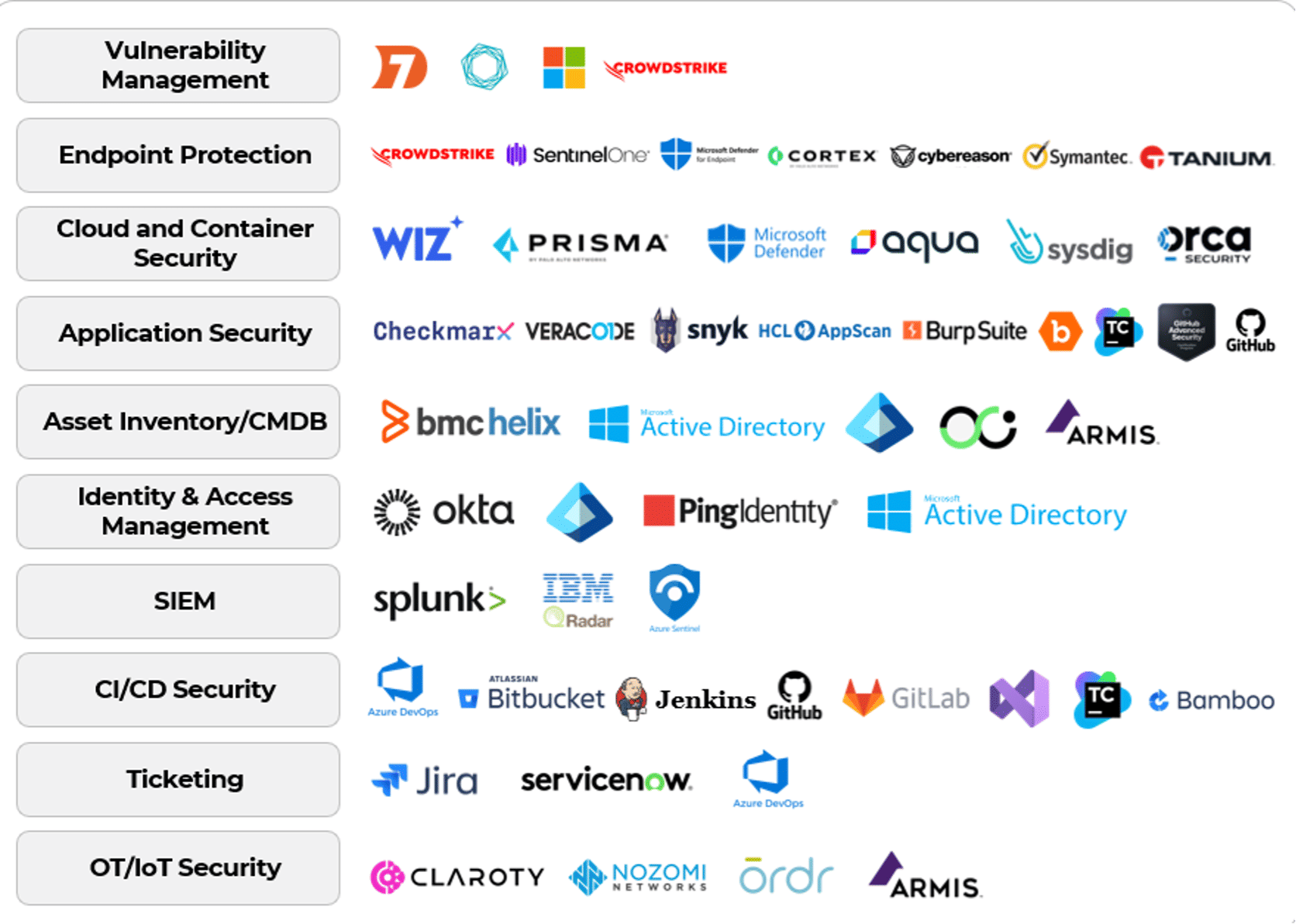
Qualys Enterprise TruRisk Management is the technology foundation for the ROC. It unifies risk data from Qualys and third-party tools, scores it with TruRisk, validates exploitability with TruConfirm, quantifies business impact in dollars, and drives remediation through TruRisk Eliminate., quantifies business impact in dollars, and drives remediation through TruRisk Eliminate.
The ROC works as a closed loop:
- Discover and unify assets, identities, and findings across the stack.
- Prioritize real risk using TruRisk, threat intelligence, exploitability, and business context.
- Prove what is exploitable with TruConfirm.
- Fix it through patching, mitigation, patchless remediation, or QFlow cloud cleanup.
Powered by ETM, the ROC gives teams one place to normalize findings, validate exploitability, quantify business risk, and drive action.
CNAPP connectors bring cloud risk into the ROC
Many organizations already have cloud security tools in place. The problem is that those tools often operate in silos, producing findings on vulnerabilities, misconfigurations, identity, and posture that never become part of the broader exposure management program.
ETM connectors turn those cloud security investments into inputs for the ROC. When a connected tool reports a finding, it enters ETM, picks up threat and business context, gets a TruRisk score, and joins the same ranked list as endpoint, identity, application, OT, IoT, and on-premises risks.
Qualys ETM has connectors for more than seven third-party CNAPP vendors, including:
- Wiz
- Prisma Cloud
- Microsoft Defender for Cloud
- Orca
- Cortex Cloud
- CrowdStrike Falcon Cloud Security
- Aqua
ETM also supports first-party connectors for Qualys TotalCloud and Qualys Container Security across all four major cloud providers. This is the connector value proposition: customers can use the cloud security tools they already have to help build the ROC. Every finding is normalized, enriched, scored, validated, quantified, and driven to remediation. Cloud risk stops being a separate dashboard and becomes part of the enterprise risk decision loop.
TotalCloud provides the first-party advantage
CNAPP connectors protect existing investments. TotalCloud provides the strongest Qualys-native path. If you already run Qualys TotalCloud or Qualys Container Security, you do not need a third-party CNAPP to get cloud risk into ETM. First-party connectors pull posture data and container vulnerabilities straight into the ROC.
The benefits add up when detection and exposure management live on one platform.
- No translation step. Findings show up in the native model.
- One platform, one agent, one console. The same Qualys footprint feeds the ROC directly.
- Richer context, faster. First-party findings carry asset and configuration context from the start.
- Closed-loop remediation. Confirmed findings move from ranking to patch, mitigation, or QFlow cloud fix.
- Less cost and complexity. One vendor, one support path.
The choice is not connector or TotalCloud. The choice is how you bring cloud into the ROC. Third-party CNAPP connectors create a practical bridge from existing tools. TotalCloud gives customers the deepest first-party path.

Take the Survey
How the ROC decides what actually matters
A plain CVSS score tells you a vulnerability is bad in theory, not whether it is dangerous to you.
The ROC fixes this in three moves.
- Threat intelligence. ETM raises or lowers priority using more than 25 threat intelligence feeds, including proof of concept code, real-world weaponization, malware activity, and ransomware campaigns.
- Business context. ETM adds what generic severity scores miss: asset criticality, internet exposure, business role, and tags.
- Exploit validation and controls. ETM factors in whether the exposure is actually exploitable and whether existing controls already reduce the risk, so teams can focus on what still needs action.
TruLens takes this further by adding industry, geography, company size, and peer benchmarking. The result is a risk view that reflects the threats most relevant to your business.
For cloud-based assets, this changes everything. A standard CNAPP can hand a ROC tens of thousands of misconfigurations and cloud CVEs. TruRisk and TruLens reduce that noise to the handful that are weaponized, business critical, and relevant now.
How the ROC proves what is really exploitable
Teams often mix up severity with exploitability. A critical finding is not the same as a finding that an attacker can actually use.
TruConfirm closes that gap by safely validating exploitability on live assets, against your real controls and configuration. The result is clear: exploitable, blocked by a control, or not reachable.
It does this without drama: no generic exploit kit, no pulling data out, no lasting changes, and no bypassing authorized controls. EternalBlue only gets flagged if SMBv1 is turned on. Log4Shell only if the vulnerable path is live.
Agent Val adds the autonomous operating layer. It selects targets based on TruRisk and active threat activity, runs TruConfirm safely in production, drives the fix, and validates again.
This is the heart of the ROC: rank, prove, fix. Ranking shortens the list. Proving shows what is real. Confirmed risk moves to TruRisk Eliminate for a patch, mitigation, or QFlow cloud fix.
What this looks like in numbers
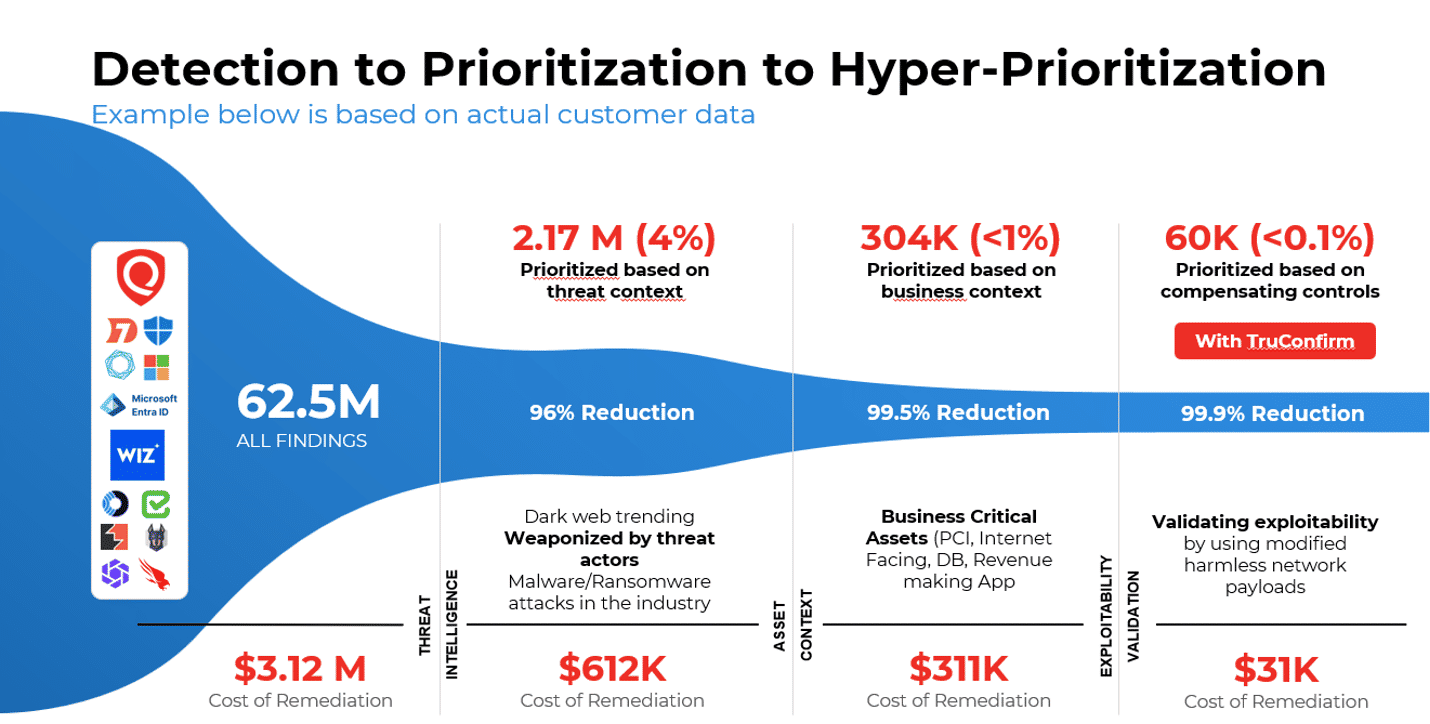
The visual below looks like a martini glass for a reason: wide at the top, narrow at the stem.
- 62.5 million findings enter the ROC.
- 17 million remain after threat intelligence filters.
- 304 thousand remain after asset and business context.
- 60 thousand remain after TruConfirm validates exploitability.
That takes the team from 62.5 million findings to roughly 60 thousand confirmed exposures, cutting the remediation focus by more than 99.9 percent. In this example, the estimated remediation cost drops from $3.12 million to about $31 thousand.
Cloud findings move through the same funnel. Thousands of CNAPP misconfigurations and cloud CVEs are reduced to the small set that is exploitable, business critical, and being targeted right now.
Talking to the board about risk in dollars
This is where the ROC pays off.
Once cloud risk is scored on the same scale as everything else, Qualys ETM turns technical findings into financial exposure. Each business entity carries both its context and quantified risk, so you can report cloud risk to the board in dollars.
The shift is to stop reporting activity and start reporting outcomes.
Stop reporting:
- How many CVEs you found
- How many patches you pushed
- Severity-ranked dashboards
Start reporting:
- Value at risk
- Dollar exposure reduced on confirmed exposures
- Average window of exposure
- How reliably fixes land the first time
With cloud included, those numbers cover the whole attack surface. You can tell the board that cloud risk maps to named business services and is confirmed closed by TruConfirm, not just closed tickets.
That also answers the two questions boards keep asking.
Are we ready for the AI vulnerability surge?
Even with detection volume jumping 2x to 3x, we rank and fix confirmed risk at machine speed.
Are we more or less exposed than 90 days ago?
We burned down X point X million dollars of risk on confirmed exposures, with confidence from proven closure, not patch counts.
How to get started with Qualys ETM
You do not need to rebuild your security program to bring cloud into the ROC. Connect what you have, prove value, and expand.
Book a demo
The fastest way to understand the ROC is to see it on your own stack. Book a Qualys ETM demo and walk through the loop.
Connect your tools
ETM does not stop at cloud. It connects to tools across your whole stack, including vulnerability management, endpoint and EDR, cloud and container security, application security, identity and access, SIEM, CI/CD, ITSM, CMDB, OT, and IoT.
For cloud, that means a third-party CNAPP like Wiz, Prisma Cloud, Microsoft Defender for Cloud, Orca, Cortex Cloud, CrowdStrike Falcon Cloud Security, or Aqua. It can also mean first-party Qualys TotalCloud and Container Security.
Browse the full list.
Prove value, then expand
Spin up a no-cost 30-day trial, point it at one cloud account and one CNAPP, and get to a single, ranked, validated, dollar-based view of risk.
Run your first hyper-prioritization. Confirm a few exposures with TruConfirm. Share the board-level CRQ report. Then expand.
There is a human side to this, too. Bringing cloud into the ROC means getting your cloud team and security operations team aligned on severity and remediation.
Closing thoughts
The companies that handle risk well over the next few years will not be the ones with the most tools. They will be the ones with a complete picture of exposure, cloud included, and a way to act on it every day.
Cloud is not a special case anymore. It is where a big part of your attack surface lives.
In the Mythos era, with attackers exploiting faster than ever before, a CTEM program without cloud is not really CTEM. It is partial coverage wearing a CTEM label.
Qualys ETM and the ROC exist to close that gap. CNAPP connectors bring existing cloud tools into the loop. TotalCloud provides the first-party path. TruRisk, TruConfirm, TruLens, and Eliminate turn findings into action.
You do not have to start from scratch. But you do have to bring cloud risk into the same operating model as the rest of your exposure program.
Frequently Asked Questions
- What is a Cloud-Native ROC?
All ROCs should be cloud-native ROCs. Because a Risk Operations Center helps manage all sources of risk, cloud cannot sit outside the risk operating model. A Cloud ROC brings cloud, container, identity, application, data, and infrastructure risk into the same prioritization, validation, and remediation workflow as the rest of the enterprise attack surface. - Why does cloud risk need to be part of the ROC?
Cloud risk moves too fast and touches too many systems to be managed as a separate queue of findings. The ROC gives security teams one place to compare cloud exposures against endpoint, server, application, identity, and network risk so they can decide what matters most. - I already have a CNAPP. Why should I care about a ROC?
A CNAPP is essential for finding cloud risk, but finding risk is only one step. A ROC helps turn CNAPP findings into exposure decisions by ranking them against the broader attack surface, validating which risks are real, and driving remediation through shared workflows. - Why do cloud findings often get stuck in a silo?
Cloud teams and exposure teams often use different tools, dashboards, scoring systems, and workflows. That means a critical cloud finding may not be understood the same way as a critical server or endpoint exposure. The result is fragmented prioritization and slower remediation. - What is the Day Minus Seven mindset?
Day Minus Seven means security teams need to act before risk becomes an active incident. In cloud environments, attackers can chain misconfigurations, exposed services, identity permissions, and vulnerable workloads quickly. The goal is to identify and eliminate the exposure path before it turns into a breach. - How does a Cloud ROC help with prioritization?
A Cloud ROC helps teams move beyond long lists of findings by asking better questions: Is this risk reachable? Is it exploitable? Is it connected to a critical asset? Does it create a path to sensitive data or business disruption? That context helps teams focus on what should be fixed first. - How do Qualys TotalCloud and ETM support a Cloud ROC?
Qualys TotalCloud finds risk across cloud infrastructure, containers, applications, AI, data, network, and identity. Qualys Enterprise TruRisk Management brings those findings into the ROC, scores them with TruRisk, validates them with TruConfirm, and drives remediation through Eliminate. - What is the business value of a Cloud-Native ROC?
A Cloud-Native ROC helps reduce tool sprawl, align teams around one risk language, cut through noisy findings, and accelerate remediation of the exposures most likely to affect the business.


Leave A Comment